
“There is no such thing as an empty space or an empty time.  There is always something to see, something to hear.  In fact, try as we may to make silence, we cannot.”  
— John Cage

Light reflects from all that we see, illuminating it, and is then received in the eye through the retina as energy and then transformed through rods and cones into neural activity, traveling down an optic nerve and reaching the brain, which the mind then translates into images.  What we know as shadow is actually that point at which our eyes are no longer capable of detecting the information that we know exists.

The concept that light does not possess as its inherent opposite shadow, but that it exists nestled tightly within a spectrum of electro-magnetic activity is central to my ghosttone work.  My photographic techniques have evolved out of a desire to isolate and absorb predetermined microminimal frequencies of light.

Light, like sound, changes over time and describes an immaterial, bodiless volume.  It can be thought of as a spectrum of waves traveling at different frequencies through space.  High frequency can be attributed to a short wavelength and low frequency to a longer wavelength.  Violet and blue have the shorter wavelengths while red has the longest.  Intensity, to be precise, is defined by the amount of energy arriving each second at a receiver of a fixed area.  It turns out the greatest intensities are in the green and blue portion of the spectrum, the shorter and longer wavelength regions are less intense.   

With the number series I therefore capture the intensity of light that exists within different color frequencies in such a way as to create a range of subtlety that does not rely on a relationship with shadow to give an impression of form.  This way of working allows me to depart from the traditional photographic notions of light and shadow and ultimately to explore the process of perception in a direct manner.

I create these images with the idea that each image is part of a series which is in turn part of a greater whole.  They are all linked and interrelated.  They communicate with, depend upon, and evolve out of each other.  They are in continuous variation with each other, their content emerging out of a constant flux of interaction.

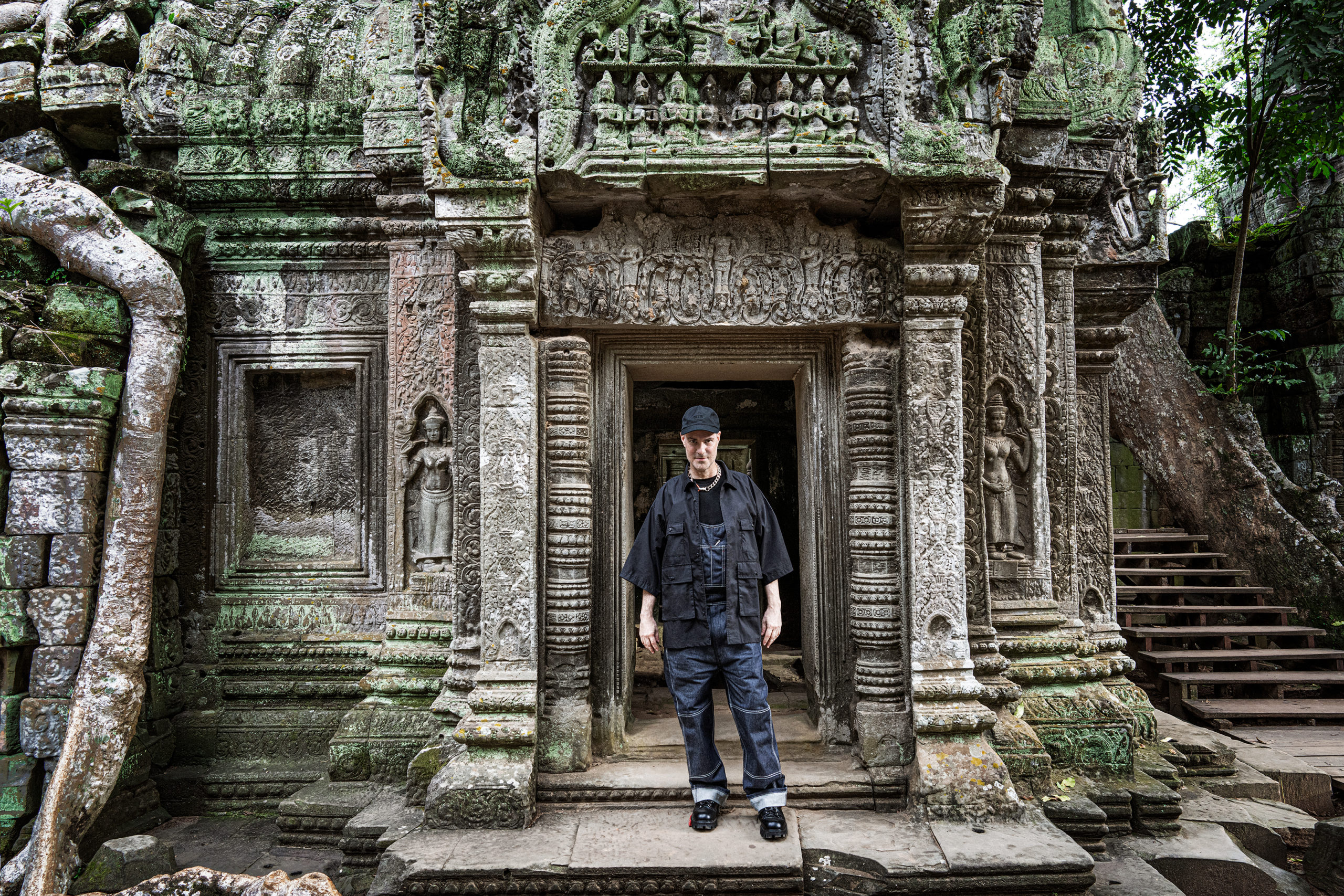
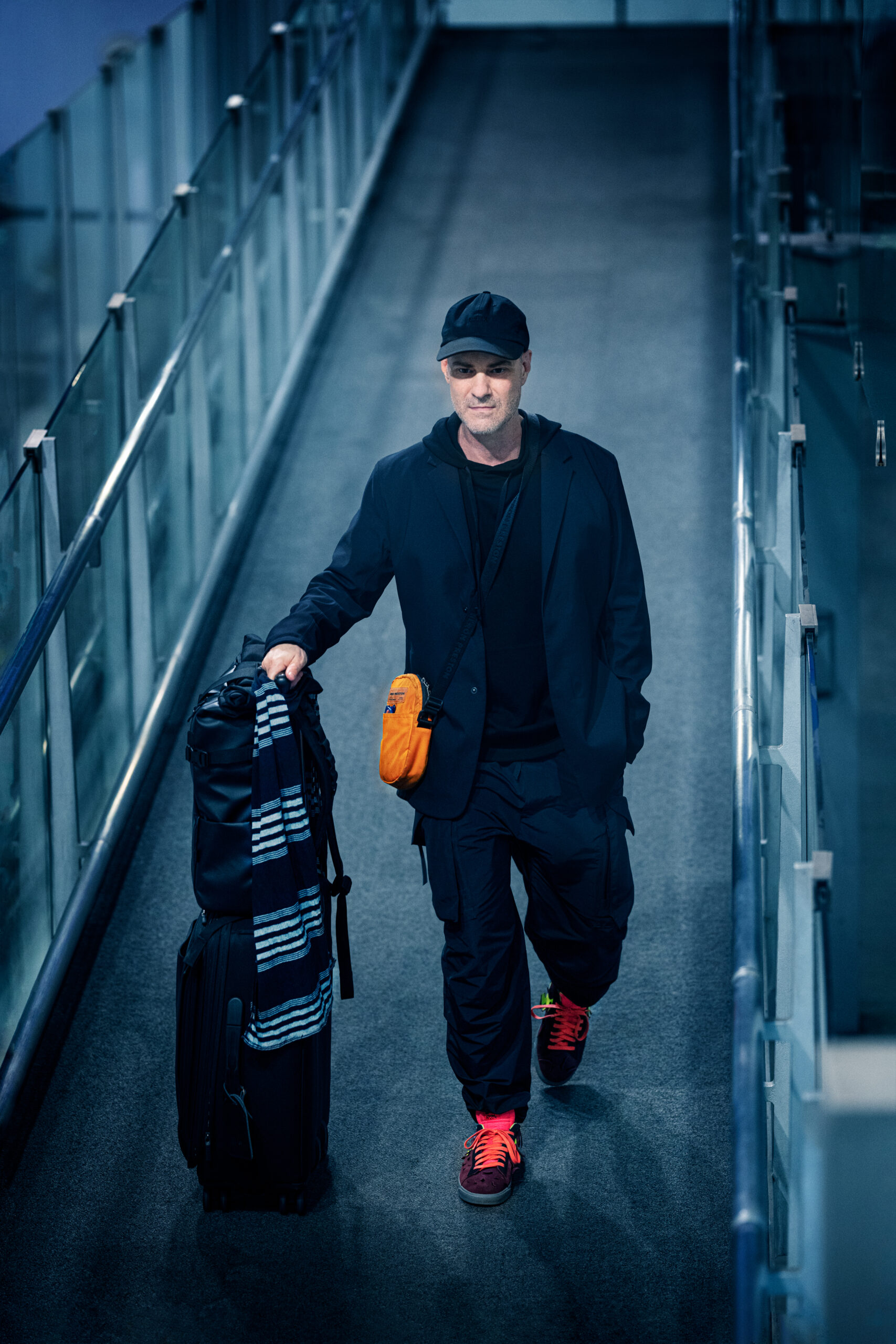
R. Scott Davis is a photographer from Brooklyn, New York.  His photographs are elusive, intriguing and much more reminiscent of paintings than photographs.  The vibrant use of colour and pattern hypnotizes the viewer and communicates with a depth only conceivable on a subconscious level.  They disturb, provoke and enlighten.  It is interesting to hear him talk about his work because he has a profound grasp of human perception and the energy of everything in life from light to sound to people.  Many artists work so intuitively that they cannot articulate the intricacies of what they do.  R. Scott Davis is surprisingly calculating in his approach and eloquent in his discussion of his enigmatic and emotional photographs.  I sat down with him in Soho to chat with him and understand more about his photographs and his process of working. 

Phoebe Montoya: How did you become interested in photography?  When did you get your start?

R. Scott Davis:  When I was doing my undergrad at Colorado University, Boulder.  My undergrad was Art history and Journalism and I took Black and White Photography.  It was one of the first fine art courses I ever took.

PM:  So who were your main influences?  You use pure colour and colour frequencies so you can create images without using shadow.  That reminds me a lot of abstract painting.  So I wonder if some of your influence came from abstract painters. 

RSD:  Well when I did my undergrad I studied the usual, including abstract expressionism.  Rothko was definitely a favorite of mine.  I have books on him and have studied his colours.  From minimalism I like the idea of reducing forms to their most essential elements.  Robert Frank was my favourite photographer.  Still is one of my favourites.  He’s amazing.   I like the way his work was always evolving - always changing - kind of like a jazz or electronica musician.  Always trying to figure out new ways to express himself. 

PM:  From where did your interest in light as frequency stem?

RSD:  My interest in light as frequency comes more from thinking in terms of music, and how a lot of composers deal with questions of sound.  John Cage and the relationship of sound to silence for example.  And I’ve always felt like the way the post World War II composers solved the creative problems that they faced is fascinating.  And I think a lot of it comes from my interest in music, and the way I visualize music when I hear it.  If I didn’t listen to the music I listen to, I don’t think my work would look the way it does. 

Davis has never had any formal musical training, yet when he speaks of his visual language, his words are laced with musical terms and influences.  He uses words like "glissandi" which are arcs of sound found in music by artists such as Xenakis to describe what he does visually with light.  He uses "micro-tonality" to describe the way he finds "notes in between the notes" in his digitized images.  John Coltrane’s experimentation in pushing the relationship between improvisation, noise and jazz had a huge impact on Davis’ artistic approach.  Merzbow, a Japanese noise-core "noiseician", with his "dense slabs of shifting sound", the British electronica duo Autechre, and the electro-acoustic music of Musique Concrete are a well of inspiration for the complexity of texture and subtlety in his photographs.  When listening to the music of any of these artists, it is easy to understand the way they have influenced Scott Davis’ work.

Much of it sounds like disconnected noise that somehow communicates on a deep, rarely touched level.

PM:  Talk a little bit about serial information and how that relates to what you do.

RSD:  I like the idea of working with multiple lines of logic, of a given way of thinking based on an experiment at the beginning where you get some results that you like, then you want to push those results and see where you can take them.  Then by doing a series you have a sense of the range of possibilities within that idea. When I think of serial information, I think of information that involves sequencing as opposed to the idea of a single perfect picture, like the notion of a resolved masterpiece where you have one picture that tries to say it all.  To me it takes a lot of images, a lot of information to move around what you are trying to say.  I want to open up a visual space for the viewer to navigate through, have their own unique subjective experience, as opposed to telling them what to think or feel with a single picture.

PM:  Do you want to talk about your father’s heart attack and how that affected your work?

RSD:  Yeah, I mean it was a minor heart attack.  But at the time we didn’t know that and for me it was the first time I’d ever experienced something like that with a family member.  And it has an effect on you that if you’ve never experienced it before you don’t really know what it is that you’re going through.  And it’s really interesting how there are memories that start to come up that you don’t realize are there, that you completely had forgotten. And they’re vivid and clear.  But the actual trauma of thinking you’re going to lose someone who is close to you releases the memories.  For me at the time when I started doing the images with the home movies it allowed me to kind of get through that situation and to understand what I was going through.  I was thinking a lot about memory at the time anyway... of cultural amnesia and such.  So it just kind of became very personal.

PM:  Can you just talk a little bit about the Number Series?

RSD: The Number Series are...they’re visual mappings of three-dimensional ambient space, where I’m really trying to work with specific frequencies of light that are within that space.  For example, the fluorescent lights in the subway system.  They have a definite tonal value to them that we, when we are in these areas, we adjust to them.  We don’t even think about it, but they do illuminate things in certain ways.  So for example, the Two Series is all ambient fluorescent light from subway stations.  And so I am working with the three-dimensional, vibrational aspect of the light.  It’s really interesting because when I’m taking the images a lot of people think I’m taking pictures of them because the subway stations a lot of times are full of people.  Because I’m working just with the light, everything else gets eliminated. Sometimes I actually have to do it at three or four in the morning so I can jump on the tracks...

PM:  You get on the tracks!

RSD:  You know, because late at night you can really count on the train taking a long time to come.

PM:  That’s scary Scott!

RSD:  So yeah, in Brooklyn also there are no security guards around on the weeknights. I have to be certain distance from the lights otherwise the film gets overexposed so sometimes the only way I can do that is by being on the tracks.

PM:  Do you want to talk about September 11th?

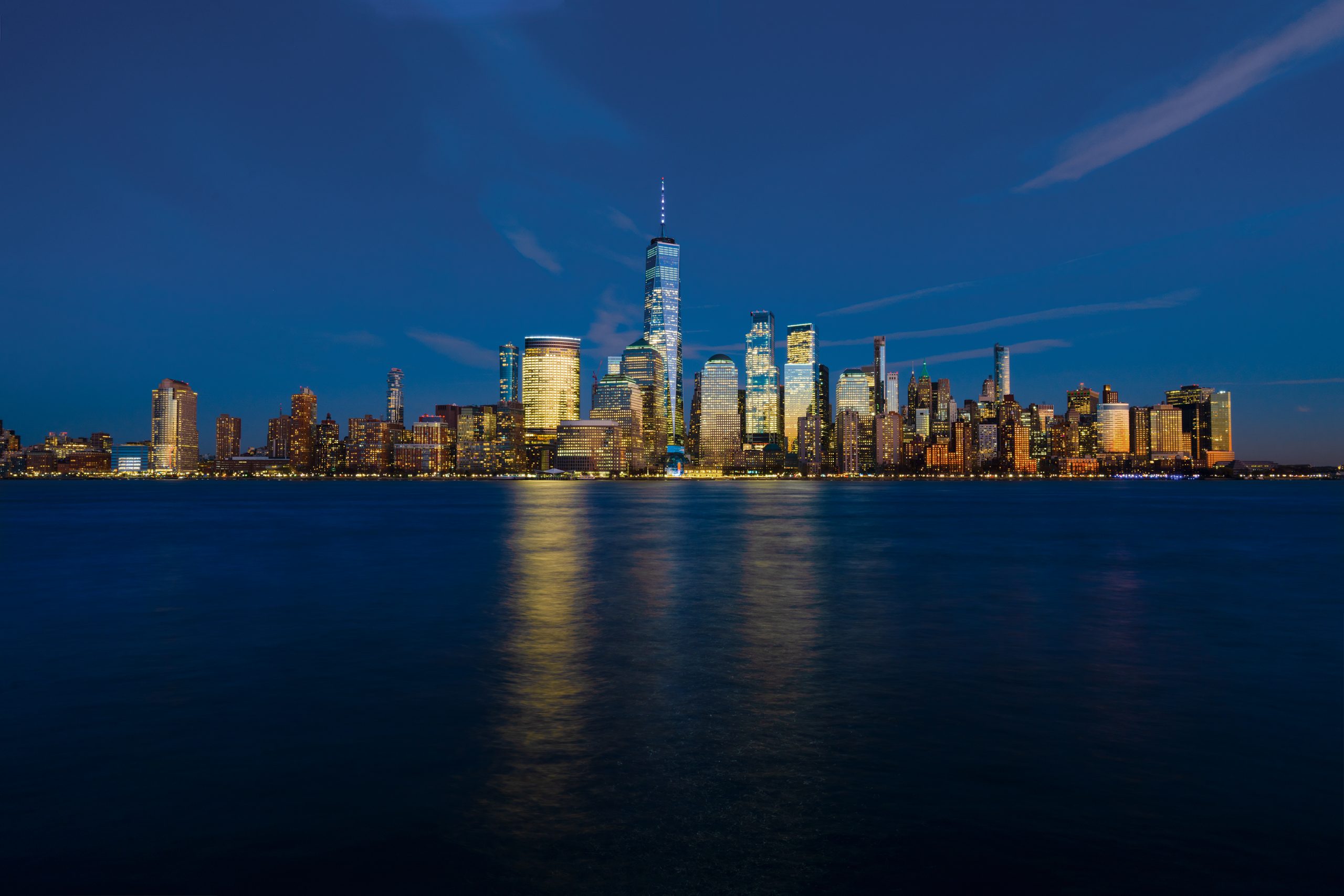
RSD:  When it all happened we were just bombarded with images from the very beginning. The images of planes smashing into the buildings over and over.  And it’s tough when you’re a photographer because it would have been so easy to take images of stuff burning.  I really wasn’t able to just run off and take pictures because I was so stunned by it all, but at the same time I needed to do something.  And then I did that image September 14 and that for me was a really powerful moment.  It was for me kind of a spiritual moment in terms of processing the whole thing. It was around day three when for me, and it seemed like for a lot of people, when we started to realize it really had happened because we were all in a state of shock and disbelief.  So it was a moment of closure for me.  It really sunk in that that was the skyline now.  That was the way things were going to be.  When I took that picture I was thinking about the clouds in the sky because for me the smoke that was pouring over the city was really...it was one of the scariest things about the whole thing because we all knew that there were a lot of things in that smoke and when I took that picture I wanted to really emphasize the smoke rising into the clouds.  Because I think that that was a huge part of my impression of what had happened was the smoke.  After I got that image back from being developed I couldn’t look at it.  I didn’ t want to even have it around.  It was about 6 months later that I actually printed it.

PM:  Describe why it’s important for people to see your work in real life as opposed to just on the web. How the scale affects your work as well.

RSD:  Well, the nice thing about working digitally is that you can work very large-scale. I am also an image technician. I do my own drum scanning myself. I have to custom scan everything.  Because of the range of the images you can’t use automatic settings, you have to use manual settings for everything.  The advantage to digital is when you go large, it’s very even, very consistent prints.  When you see the images in the flesh you get more of an impression of the force of the light than when they are small.  The vibrancy resonates more. You can really see the texture and the density of the patterns.  The nice thing about my drum scanner is I can pick up the really subtle information and extract it from the film.  All the images are emulsion based with no Photoshop manipulation other than slight colour correction and contrast.

PM:  So what size do you typically print?

RSD:  From 50"x75" to  60"x40". Yeah, that’s a decent range in size.

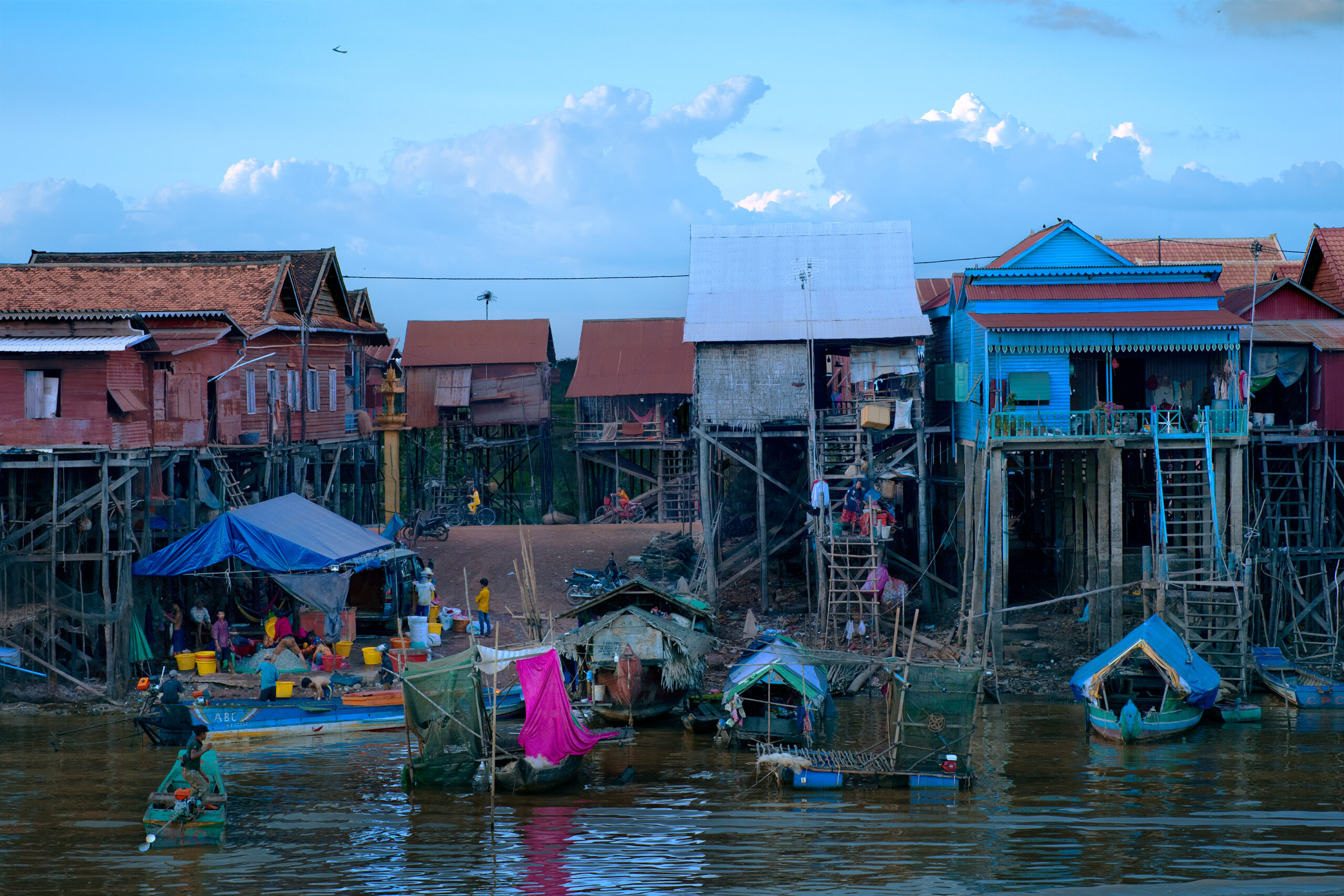
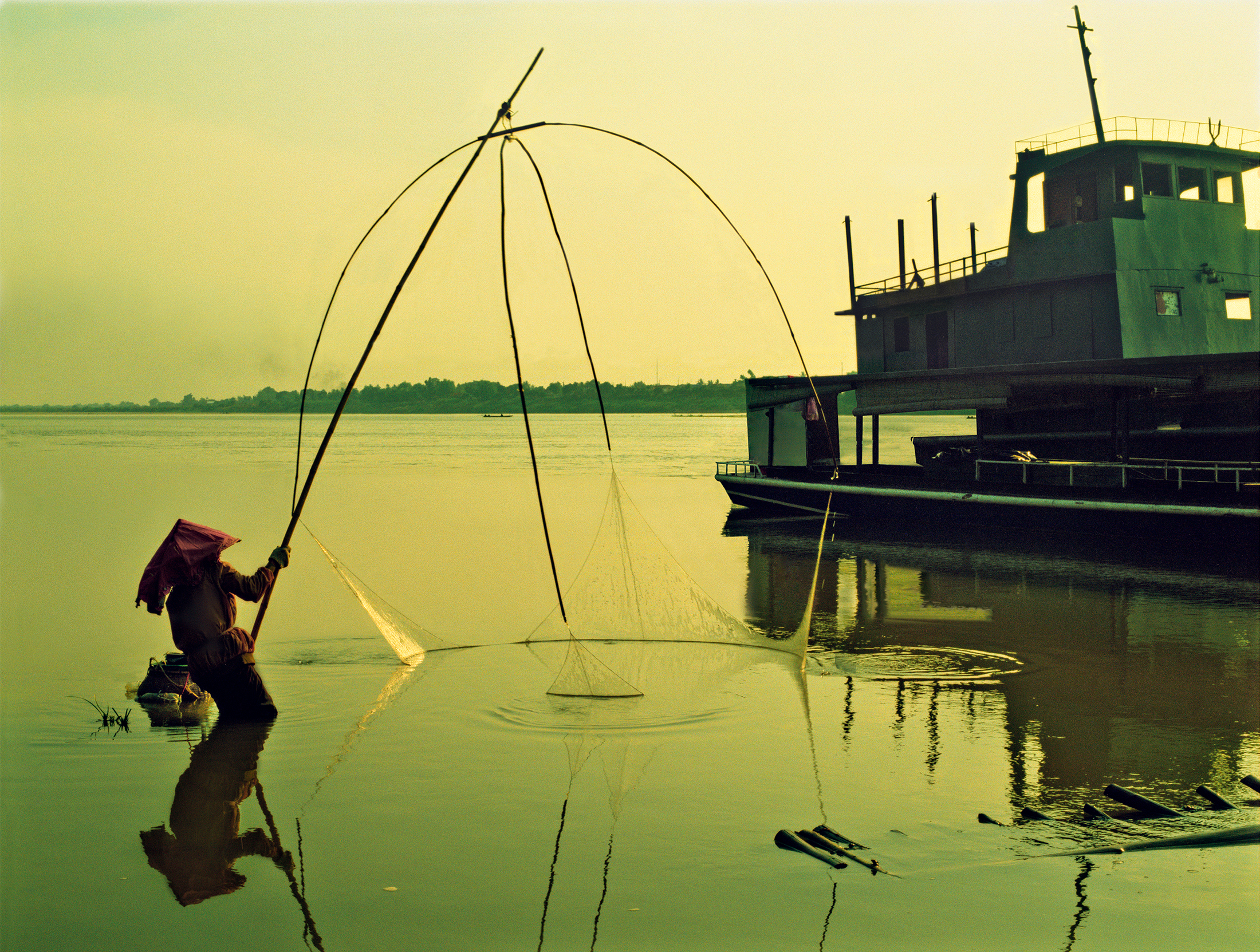
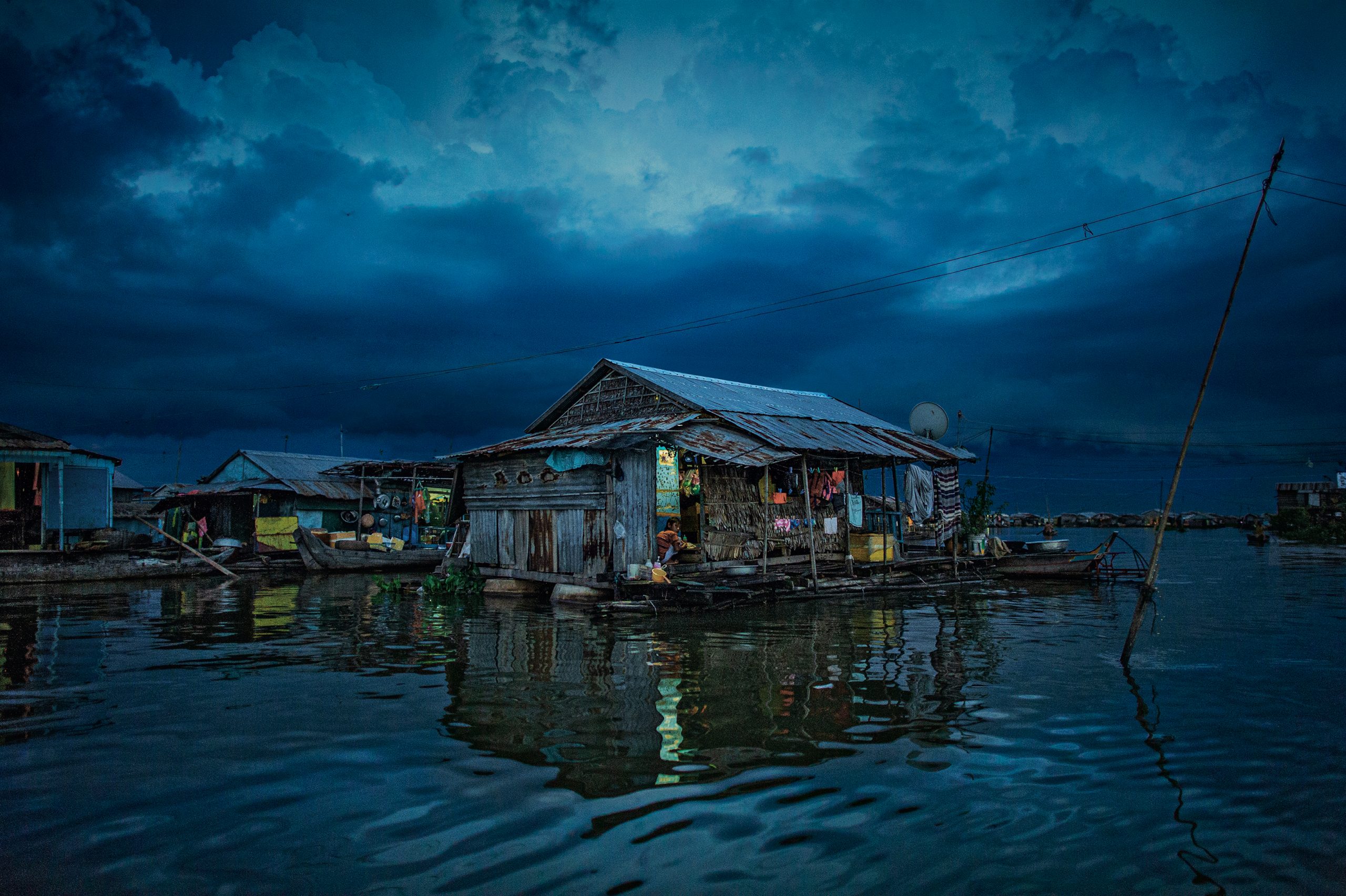
“Of Rivers and Mantras: the Mekong System” is a five year trans-boundary project by photographer R. Scott Davis that explores the complex relationships that exist between the Mekong River, its surrounding ecosystems, and the populations of people whose survival depends directly upon it.

The Mekong River, one of the world’s epic rivers such as the Amazon, the Ganges, and the Nile, has been providing sublime nourishment for survival to millions of people for thousands of years. Our mental time-lapse film of the Mekong River in which a flurry of lifeblood activity buzzes around the unfettered metronomesque pulse of the river is now irrevocably being altered. One word that does not come to mind when we think of the “mighty” Mekong River is vulnerable, and yet that is precisely what it has become.

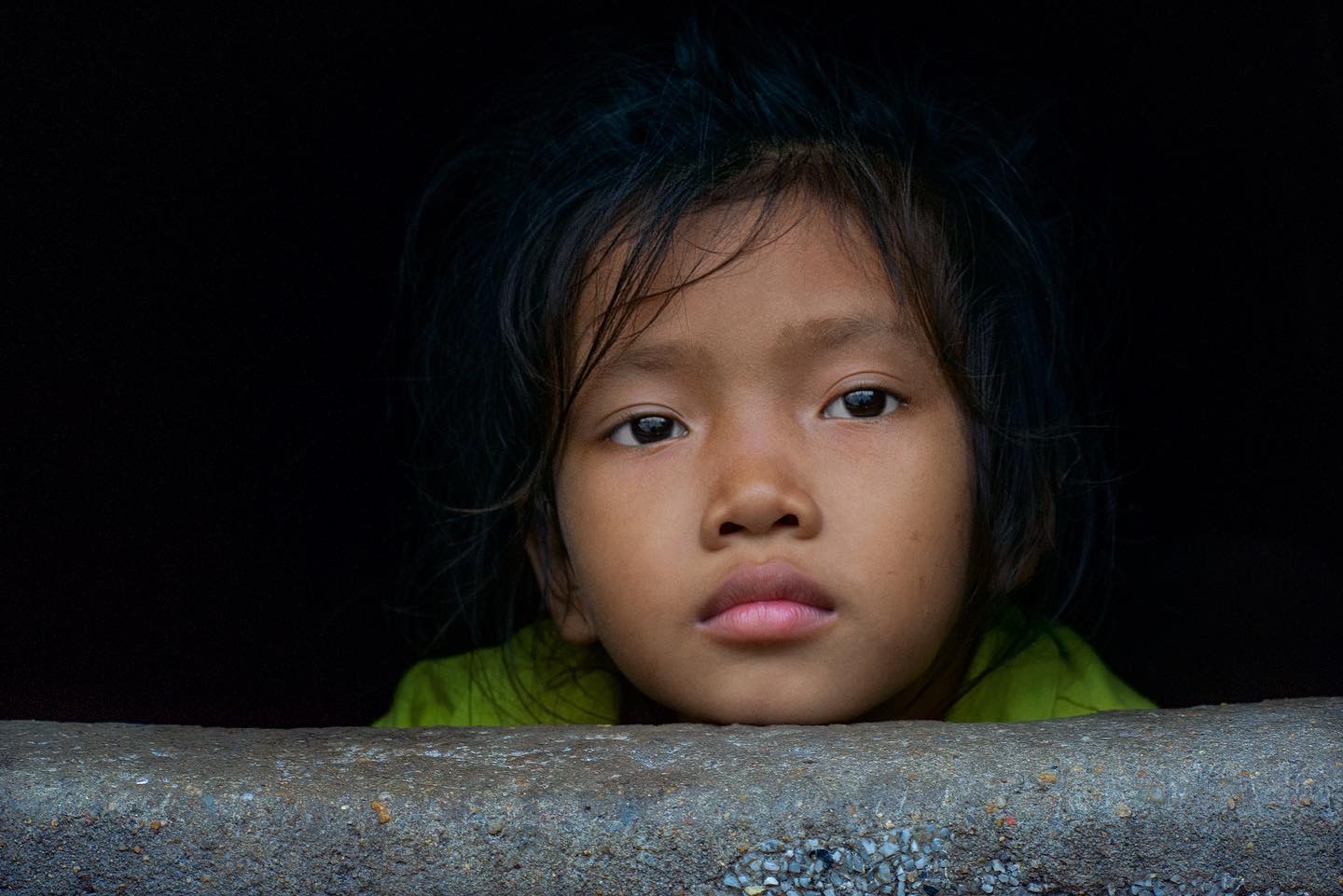
Data reflecting the effects of climate change and the continual building of hydroelectric dams on the hydrology of the Mekong River and the surrounding ecosystems can often be complex and subject to various interpretations.  For this reason one of the main focuses of “Of Rivers and Mantras” is to attach a human face to those whose methods of survival are intrinsically connected to the Mekong River and are therefore directly impacted by these abstract sets of data in very real ways.

The series begins with the “My Tho Panoramic, Mekong Delta, Vietnam”, a panoramic image that is monumental in scale (twelve feet long) and utilizes a micro / macro relationship that captures both the daily activities of My Tho’s denizens in an intimate manner while   evoking the sweeping force of the river as it surges through My Tho.

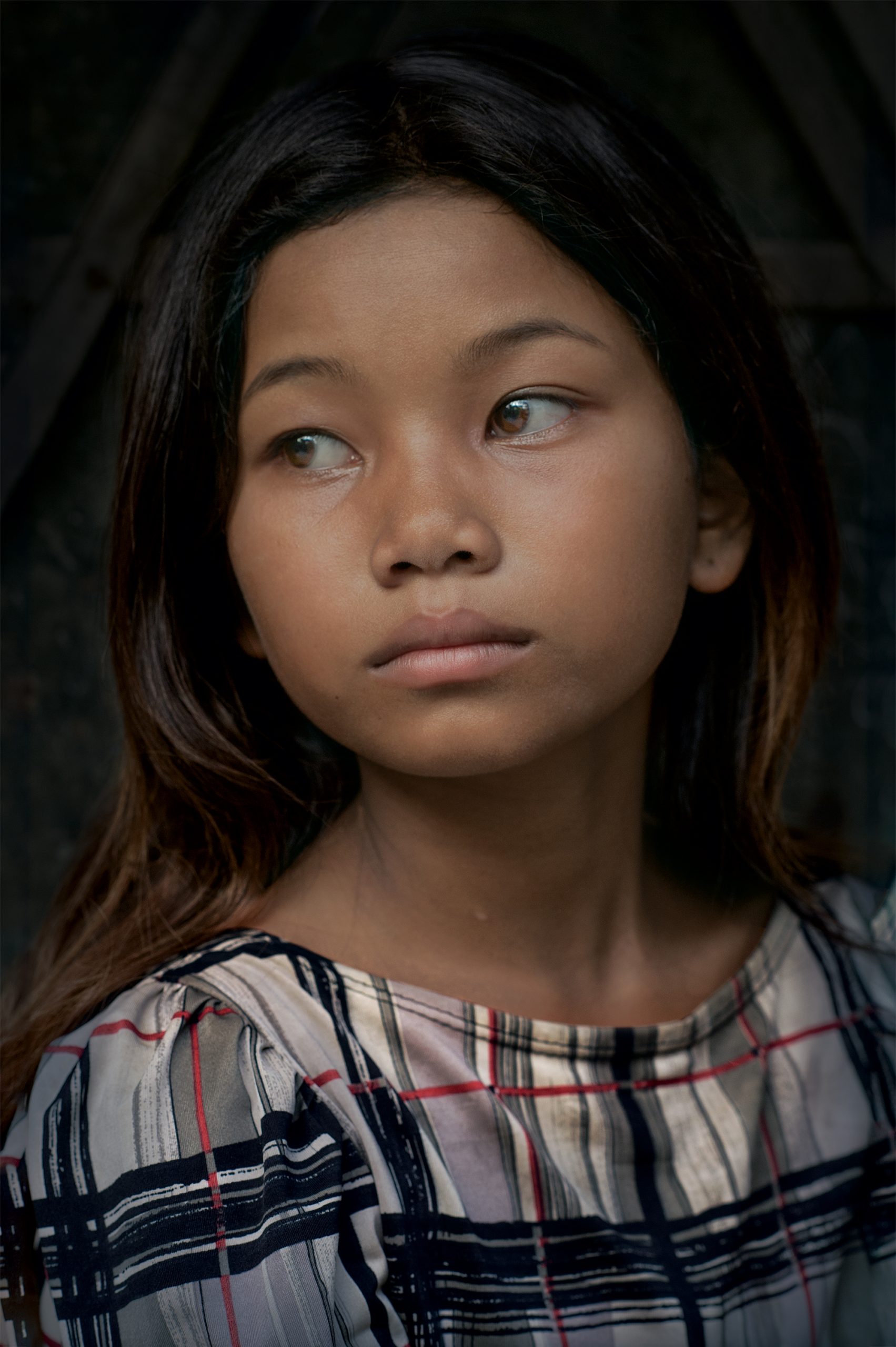
Other images in the series such as the “Fisherwoman, Vientiane” and “Pan, Phnom Penh” are portraits, perhaps figurative portraits would be a better description, capturing daily life along the Mekong River, in this case, in Laos and Cambodia respectively. 

The series concludes with a diptych of panoramics shot in Vientiane, Laos.  These two images were shot from the exact same vantage point months apart at two distinctively different times of the year, the first one during the rainy season, when the level of the river is naturally at its highest, and the second one in the dry season when the level of the river is at its lowest. When juxtaposed, the lines of the horizon are identical in both images while the fluctuations in the water levels of the river are vastly different.

The “Of Rivers and Mantras: the Mekong System” was shot using large and medium format film cameras, the film then custom processed and drum-scanned by the photographer himself in order to ensure that the very specific analog tonal values the photographer desired were achieved. 

Fri, 04 May 2012 05:43:08 +0000

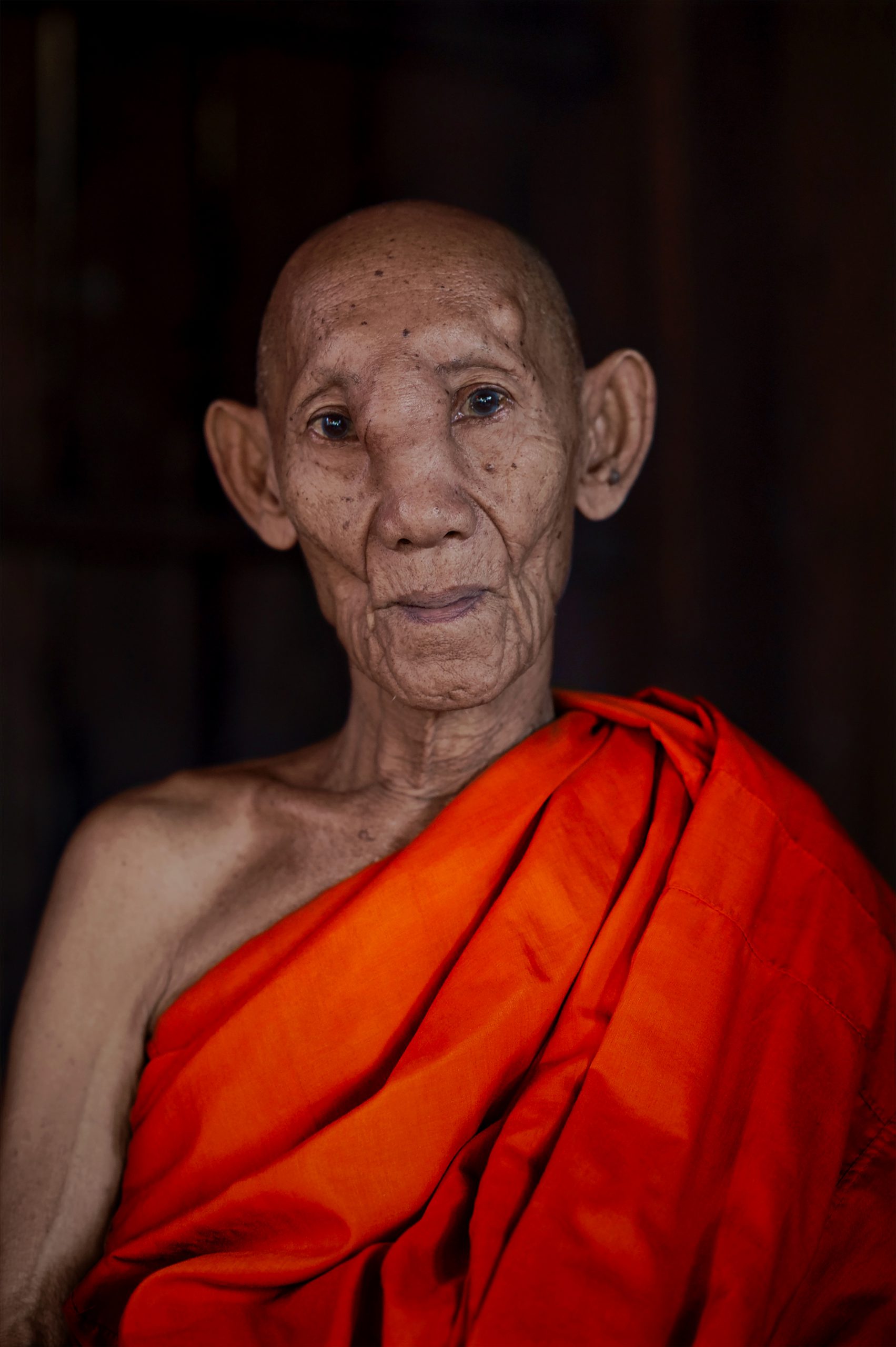
Ashin Uttama at the Shwedagon Pagoda, Yangon, Myanmar

 Ashin Uttama, Yangon

As they were tallying the votes in the April 1, 2012 Myanmar parliamentary by-election, I discussed with my friend Ashin Uttama the day’s events while in his monastery in Yangon.   I wanted to get his impression on what seemed to me an extraordinary event.

Living under a military dictatorship in a state of low voltage fear over the years has reinforced within Ashin Uttama a survival instinct that guides him in his daily life.

He spoke to me of a monk friend in his previous monastery that he discovered was a soldier after having lived with him for five years.  His sense of trust from that day forward was shattered.

“I used to sleep next to my friend in the monastery every night for five years”, he told me with a sober look in his eyes. “He was a brother to me.”  Now he casts a wary eye on everyone he encounters.

In Myanmar anyone can be a covert agent for a government proxy group.  A monk may be a trained army soldier, a taxi or cyclo driver may be a policeman.

One evening while we were sitting and chatting at the Schwedagon Pagoda, Ashin Uttama pointed out a soldier in plainclothes to me. “You see that man?  Look at his walk.  He is army.  Only army walk like that.”

At that moment I was then able to distinguish the soldier characteristics.  Even though he was wearing a white buttoned-up collarless shirt and a longyi, the traditional Burmese sarong, the way he walked with his back upright, shoulders squared and chest projected forward reminded me of a soldier marching in formation.

When the military regime shut down Ashin Uttama’s monastery during the demonstrations of the 2007 Saffron Revolution he became homeless.  After searching for sometime he eventually found himself in an old dilapidated two-story building.  Part of his agreement with the building owner is that he takes care of a mute seventy year-old monk living upstairs who has decided he prefers the discipline of meditation to the company of people and hasn’t spoken a word to anyone in over twenty years.

Because Ashin Uttama finds the official government news sources to be useless and doesn’t have easy access to the internet, television, or even own a mobile phone, he gets his news from a cheap transistor radio he keeps in his monastery that operates on charged batteries.

With the antenna extended he listens closely to the news in English, the BBC being his favorite.  The signal is weak and buried in a thick crackling fuzz that sounds more like a transmission from a bygone era than a twenty-first century newscast.

When we discussed Aung San Suu Kyi’s rise to a seat in the parliament, Ashin Uttama remained skeptical.  He believes her ascent is part of an orchestrated effort by the military regime to increase their wealth; that the government realizes she is an esteemed democracy icon and know once she is allowed into the parliament, money will flood into Myanmar.  “She has no real power,” he said to me as he spat a thin bright red stream of betel nut juice into a small cellophane lined basket.  Given the fact that trust is a rare thing for Ashin Uttama, I feel extremely fortunate to have had him share his remarkable stories with me.


Thu, 03 May 2012 08:21:24 +0000

Ashin Uttama in his monastery, Yangon, Myanmar

Thu, 03 May 2012 08:10:32 +0000

Ashin Uttama in his monastery with his Journal, Yangon, Myanmar

Wed, 02 May 2012 04:22:34 +0000

Thankthanshwe at the market, Yangon, Myanmar (Burma)

Tue, 01 May 2012 10:36:33 +0000

Girl student riding a bus on Bayanar St., Yangon, Myanmar (Burma)

Sun, 15 Apr 2012 10:43:28 +0000

Two boys covered inดินสอพอง, Songkran สงกรานต์, Thanon Silom ถนนสีลม, Bangkok

Sat, 14 Apr 2012 11:32:06 +0000

Lovely smileยิ้มน่ารัก, Songkran สงกรานต์, Thanon Silom ถนนสีลม, Bangkok

Sat, 14 Apr 2012 05:17:34 +0000

Gatoey (Ladyboy)กะเทย silhouettes, Songkran สงกรานต์, Thanon Silom ถนนสีลม, Bangkok

Wed, 28 Mar 2012 13:18:13 +0000

Jeabเจี๊ยบ and Suthin สุทิน, Klongtoey Docklands ท่าเรือคลองเตย, Bangkok

Tue, 20 Mar 2012 11:20:09 +0000

Aowอ้อ and Aon อ้น, Chicken processing ล้างเครื่องในไก่, Klongtoey Market ตลาดคลองเตย, Bangkok

NEW YORK ADDRESS:

72 S Portland Ave. #3
Brooklyn, New York 11217
USA

BLOG:  http://www.rscottdavis.com/
FACEBOOK: http://www.facebook.com/r.scottd
TWITTER: @RScottGhosttone
EMAIL: scott@ghosttone.com

PHONE:

(THAILAND) +66 84 66 70 982
(NEW YORK) +1 917 515 3977


Enter your email address below to receive updates about new work, travel and exclusive exhibits:


R. Scott Davis | Ghosttone